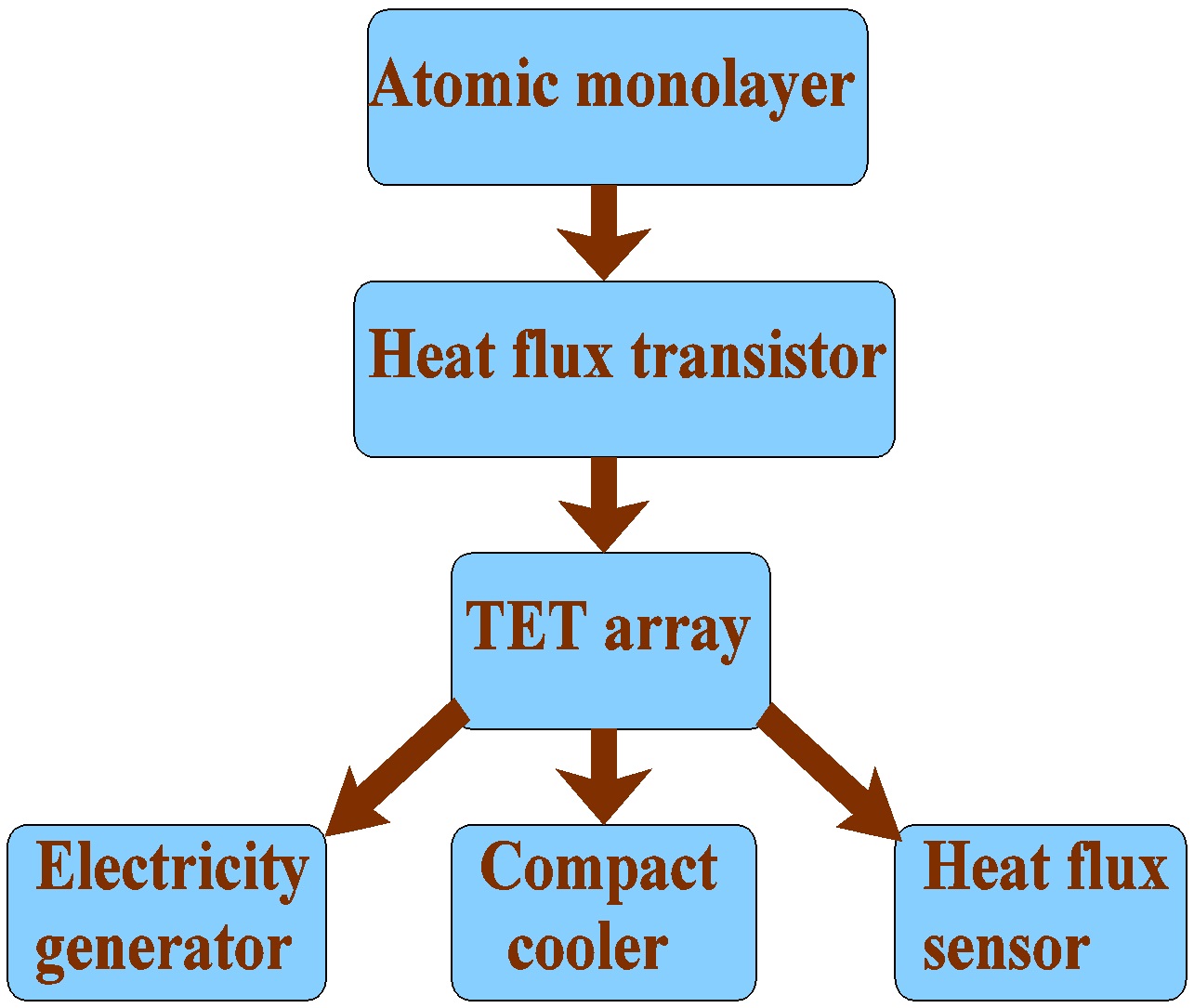
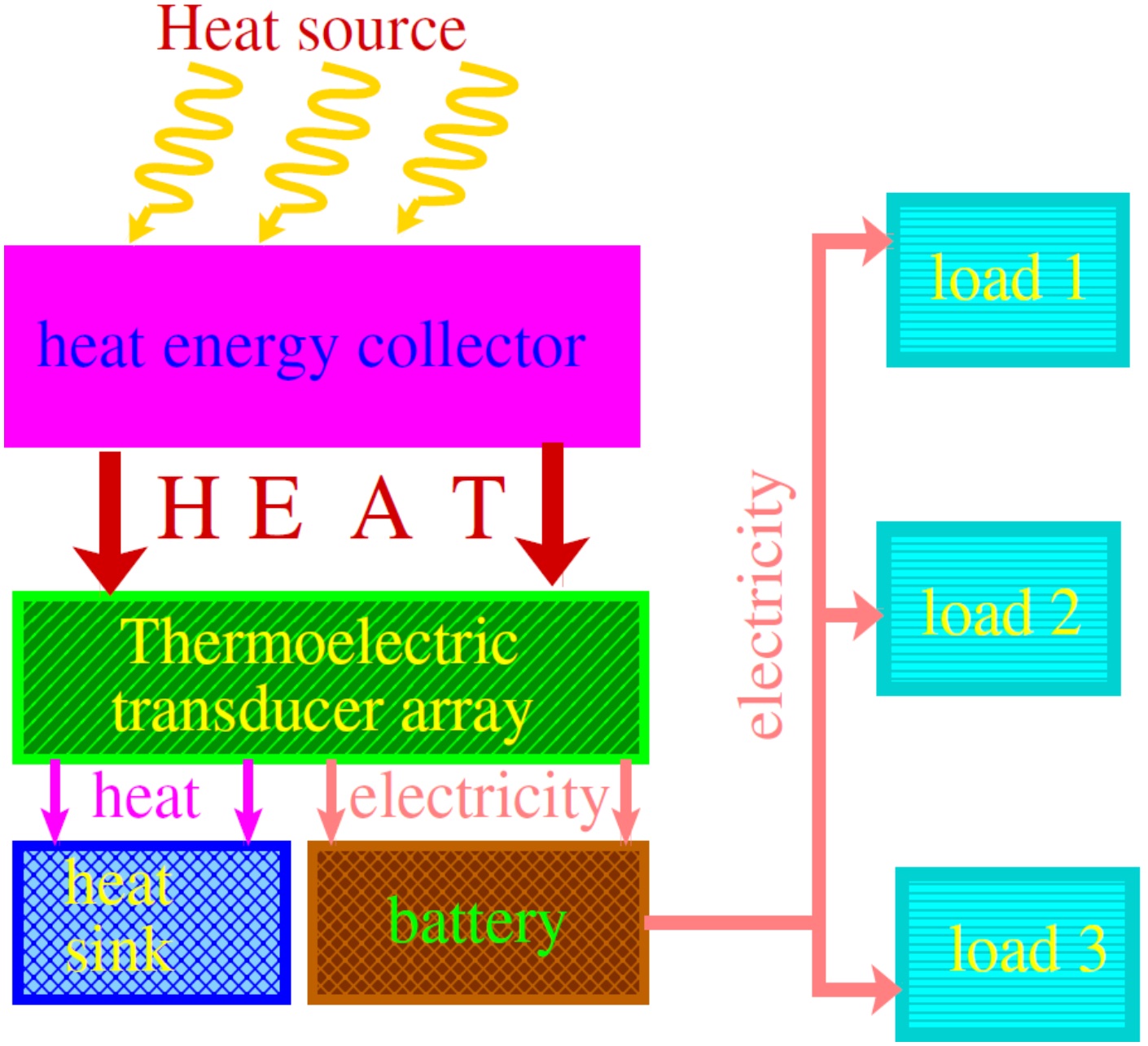
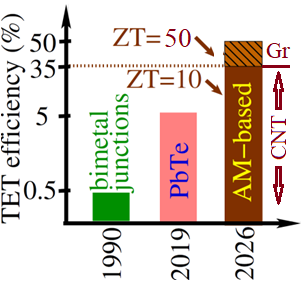
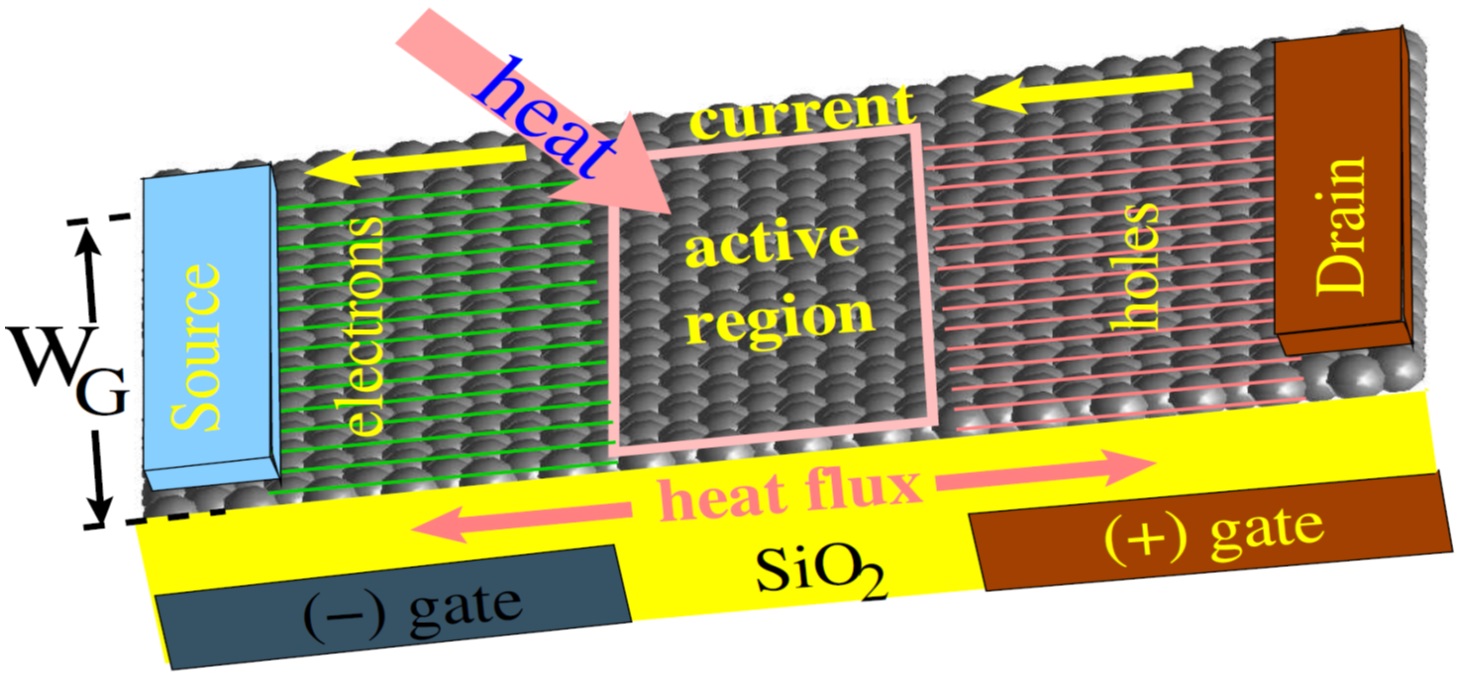
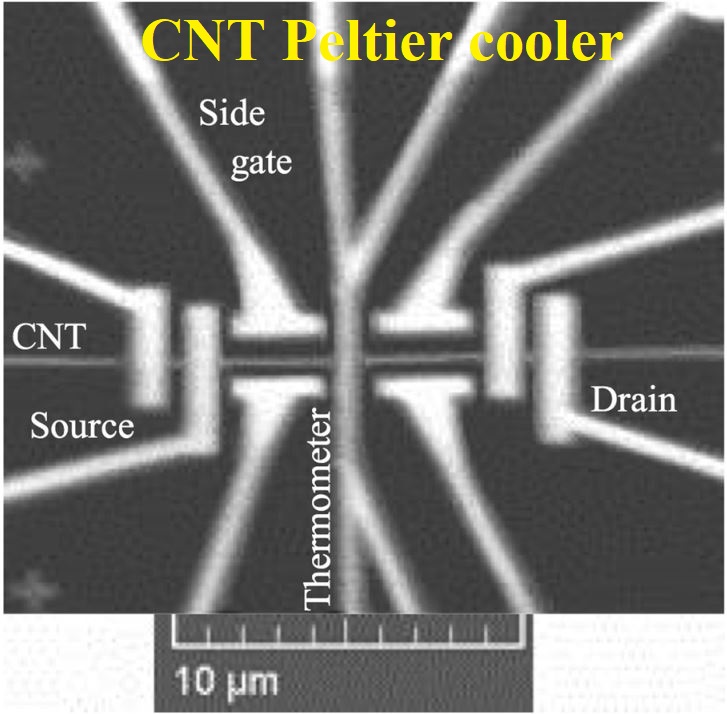
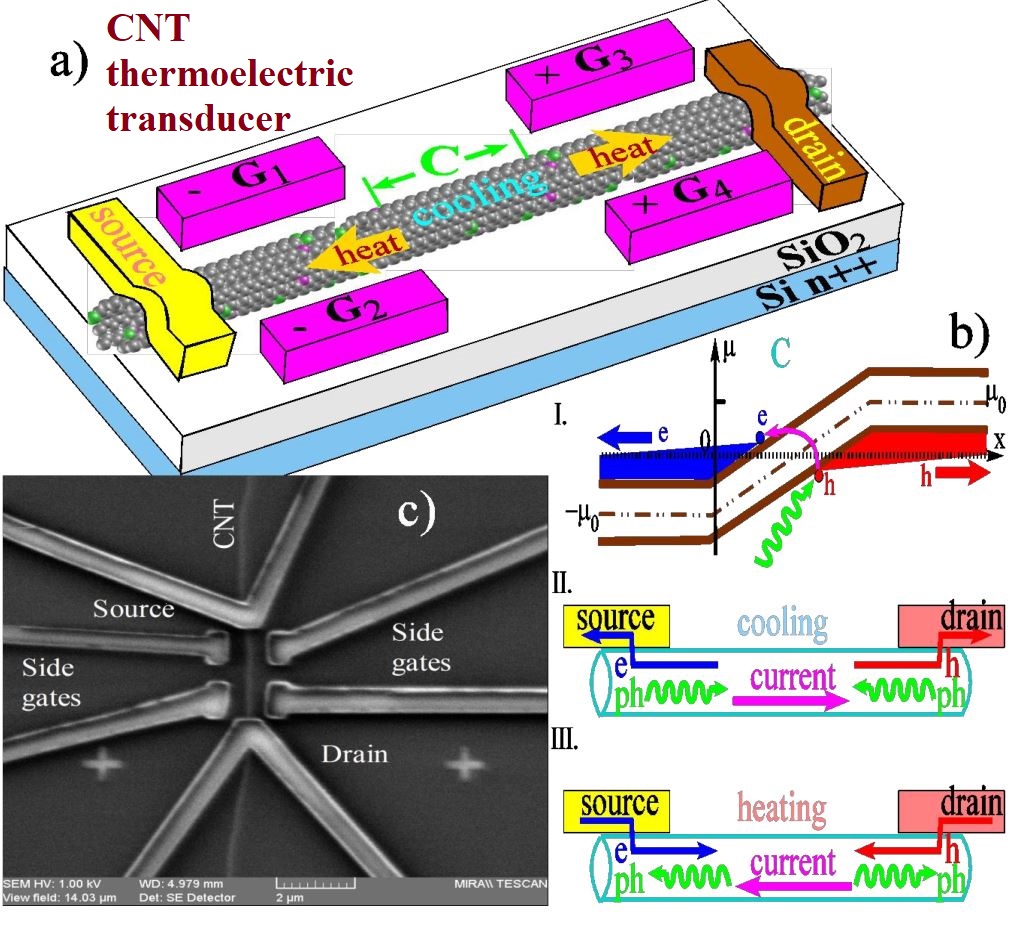
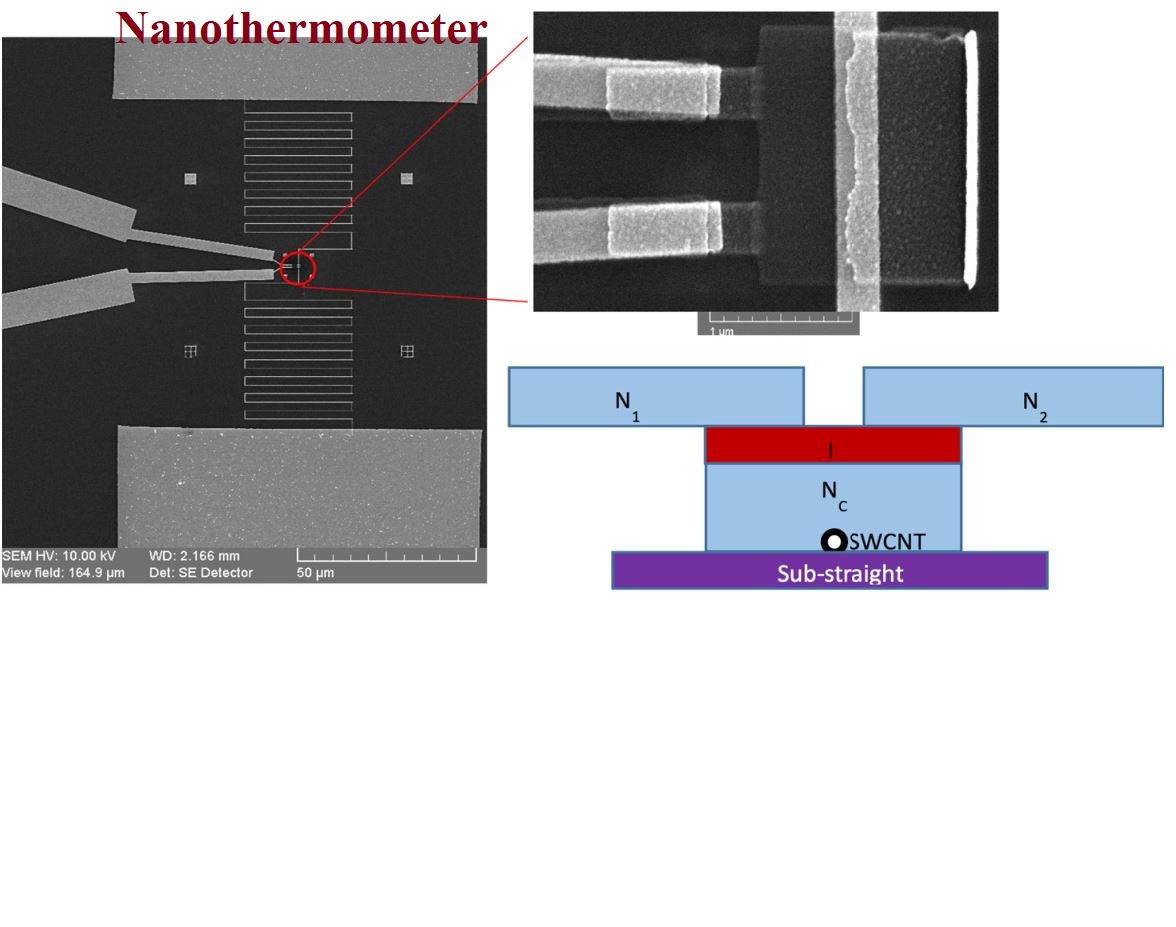
Tegri LLC stands for Thermal and Electric Grid Research and Inventions. Tegri LLC focuses on 2D materials for “clean” energy and electronic applications. One example is graphene, forming the basis for new thermoelectric and nanoelectronic applications. Graphene thermoelectric transducers promise to improve the cooling and electricity generation efficiency by one to two orders of magnitude [1,2]. Thus, our efforts address the energy conversion and storage, thermal conductors, reinforcement in composites, electronics, and medicine [2]. Solving the energy efficiency issue would facilitate technological solutions in human life, ranging from nanotechnology to automobile design. Creating thermoelectric transducers with a large figure of merit ≥ 4 would resolve a variety of technological problems related to energy generation, cooling, and thermal management at both the macro- and nanoscales, with no mechanical parts implicated, no operational carbon footprint, and without the output of toxic chemicals. The 2D atomic monolayers demonstrate potential [3, 4] for a thermoelectric transducer with very high efficiency [5]. Physical mechanisms of transduction [6, 7] are based on chirality and Klein tunneling of electric charge carriers that are robust to the lattice imperfections. Efficient doping with the gate electrodes [5] alters the local carrier concentration, resulting in a high thermopower. The thermal conductance is controlled with the help of nanostructuring and alloying [2]. These also facilitate the transducer’s efficiency by diminishing the phonon part of the thermal flux by orders of magnitude. The above strategy provides high magnitudes of thermopower and electric current simultaneously, while minimizing the thermal flux, which results in a high efficiency of the transducer. Thus, the unique properties of 2D atomic monolayers open up wide opportunities that were not possible in conventional materials. This suggests a foundation for revolutionary technological solutions in many areas of human life. The theory of Peltier cooling in carbon nanotubes [7] initiated experiments [3, 4] that revealed interesting phenomena. Furthermore, questions that have emerged from the experiments led to further development of the theory [5]. Besides graphene, the study of thermoelectricity and heat transport was extended to other 2D materials and heterostructures formed on their basis. Most attention was paid to thermal and electronic transport properties of gated graphene, its allotropes, and other relevant atomic monolayers, such as transition metal dichalcogenides (TMD) and black phosphorene. Tegri LLC focuses on the following emerging applications of graphene that include (i) highly efficient thermoelectric transducers, i.e., the coolers and electric energy generators from heat with the figure of merit ZT ~ 30; (ii) graphene sensors and lasers for far infrared and THz; Remaining issues to resolve (iii) Connection between the nano-world and macro-world; (iv) Development of the fabrication technology of the high-quality graphene samples. (v) Fabrication and testing of the respective macro-devices based on 2D materials.
1. Shafraniuk, S., Graphene: Fundamentals, Devices and Applications. 2015: Pan Stanford. 634.
2. Shafraniuk, S., Thermoelectricity and Heat Transport in Graphene and Other 2D Nanomaterials. Micro and Nano Technologies. 2017, Philadelphia, United States: Elsevier - Health Sciences Division. 546.
3. Mayle, S., et al., Journal of Applied Physics, 2015. 117(19).
4. T. Gupta, I.P.N., V. Chandrasekhar, S. Shafranjuk, arXiv:1611.03040 [cond-mat.mes-hall], 2016: p. 27.
5. Shafraniuk, S.E., Nanoscale, 2016. 8(46): p. 19314-19325.
6. Shafraniuk, S.E., European Physical Journal B, 2014. 87(4).
7. Shafraniuk, S.E., Epl, 2009. 87(5).
8. T. Gupta, I.P.N., V. Chandrasekhar, S. Shafraniuk, 2016. arXiv:1611.03040 [cond-mat.mes-hall].
 Inscríbase